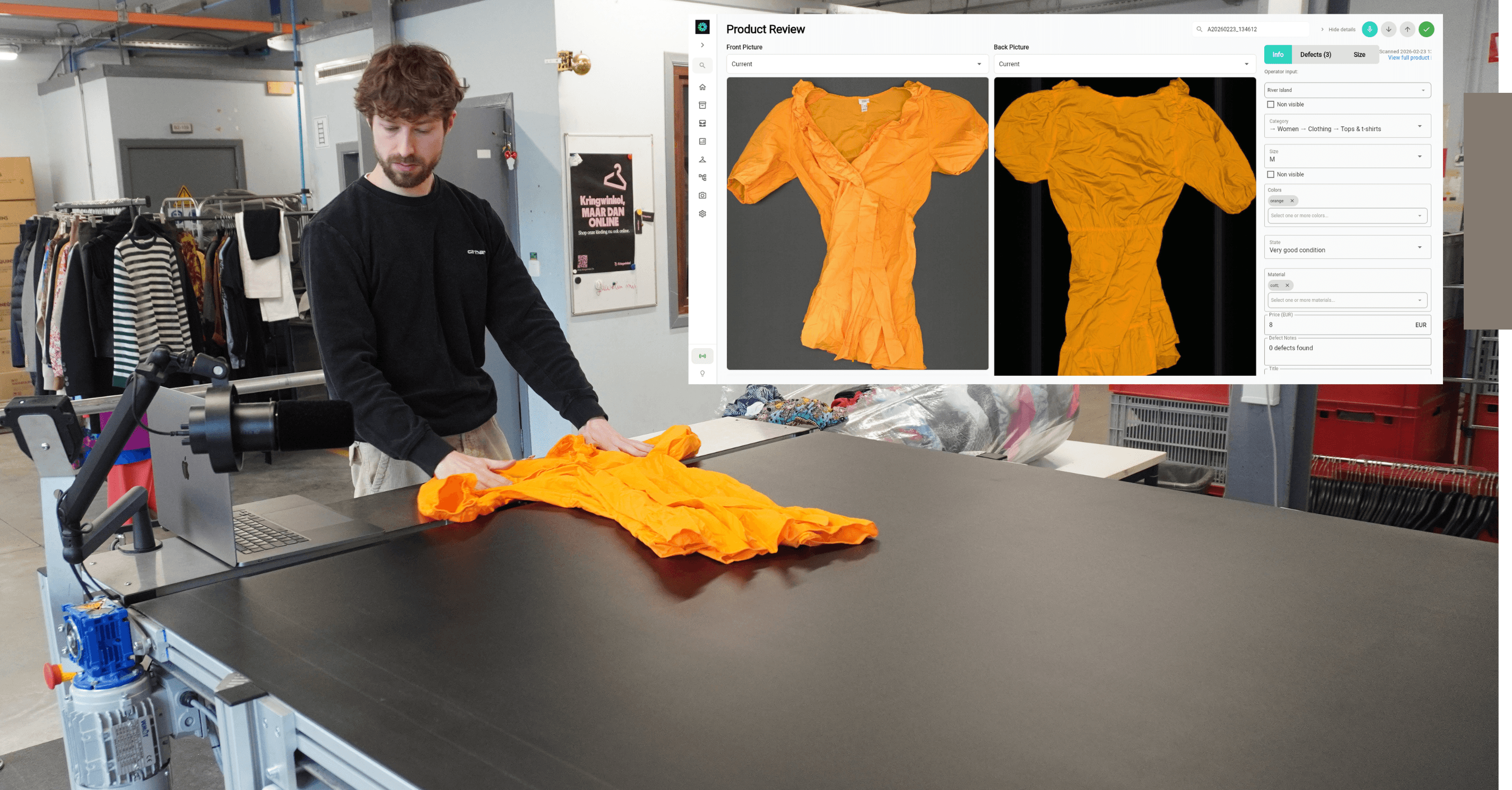
"Manual sorting is divided into stages because a human can only answer one question at a time. A computer doesn't have that limitation; it can see the brand, the fiber, and the defect in a single second."
The Current Reality: A Multi-Step Process
In most cases, the textile sorting process is divided into multiple distinct steps. Depending on the specific strategy or customer requirements of a sorting center, these procedures typically include:
Gross sorting: Removing non-textiles.
Primary sorting: Separating wearables, households, shoes, and accessories.
Secondary sorting: Grading for quality.
Categorization: Identifying the final product.
Feedstock: Funneling items into the recycling stream.
Currently, sorting centers adapt these by combining steps. Some merge procedures 1 and 2 into "pre-sorting," while others combine 3 and 4 into "fine-sorting." Some centers skip the recycling feedstock entirely.
The Problem: The Speed vs. Parameter Trade-off
The challenge with the current manual system is that throughput is always a trade-off. A human sorter can process up to 2.5 tonnes per day if they are only performing Primary sorting. However, as soon as you add more parameters to the decision-making process, it becomes trickier. Fine sorting throughput usually drops to between 700kg and 1.2 tonnes per day.
We divide manual sorting into these stages because it allows a sorter to focus on one question at a time: Is this a textile? How is the quality? What end product can I make with it? This repetition is currently the only way to maximize human efficiency.
The Technical Shift: Computers are Smart
While humans work best with one question, algorithms process information differently. A computer processes information sequentially, but significantly faster and in much larger quantities. In about one second, an algorithm can identify and process:
Fiber composition and Color (RGB)
Garment type, Brand, and Size
Defects and Gender
If a first-line sorter has the computational power to analyze all these parameters at once, the need for multiple sorting steps disappears. You could even compute variables that were previously impossible to track at speed, such as whether a garment is profitable to repair, clean, or sell for upcycling.
A New Paradigm: Single-Pass Sorting
The traditional flow, moving from Original to pre-sort, then first sort, then fine sort, is replaced by a new model: Original → Single Scan → Final Output.
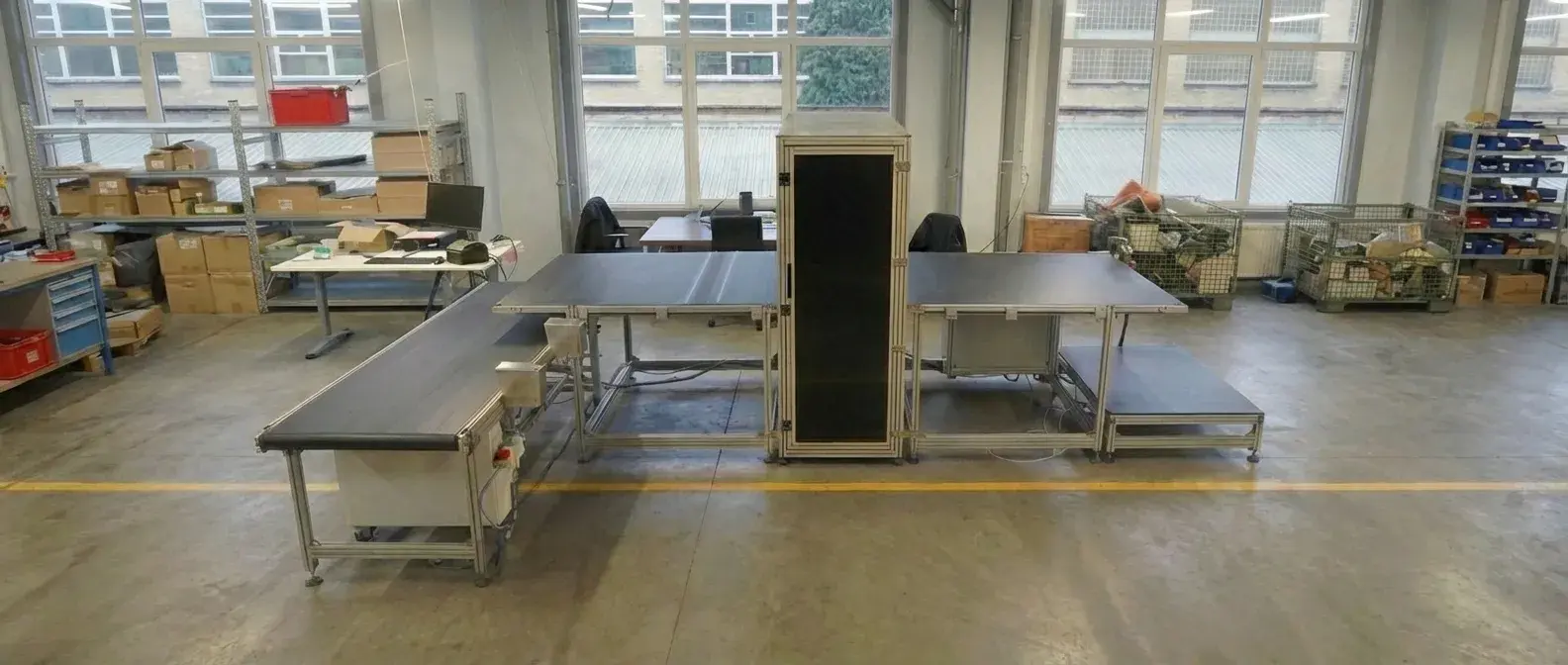
This avoids two or three extra sorting steps and enables new sorting outcomes. This is made possible by a specific tech stack:
NIR & RGB sensors: For fiber and color.
360° imaging & X-ray: For full garment analysis and finding disruptors.
Computer Vision & Machine Learning: To detect characteristics and make the final grade or price decision.
Compressed air or robotics: To route the garment.
The Bottleneck: Feeding, Not Classification
The biggest challenge is not the AI's ability to classify; it is the speed at which garments can be fed into the machine. If garments overlap, twist, or cover each other, the system cannot analyze them. Throughput is currently limited by human feeding.
The Future of the Sorting Floor
In the near future, the most efficient approach will be a hybrid system. Pre-sorting will happen manually at high throughput (2 tonnes/day), and items deemed worthy of further analysis will pass through a machine to determine their final output.
Eventually, breakthroughs in high-throughput automated feeding will allow for full automation. By adopting modular technology progressively today, sorting centers can prepare for this future.
Conclusion
Textile sorting is about pressing tight margins. With labor costs rising, manual sorting alone will soon no longer be profitable. Automated single-pass sorting is becoming essential to the future of both reuse and recycling.
Prepare your facility for single-pass sorting.
Efficiency is the only way to protect your margins as labor costs rise. Contact Trosort to learn how to integrate modular AI technology into your sorting process.