"While it may not be profitable to sort exclusively for recycling yet, the winners of the next decade will be those who master the high-margin Reuse game while preparing for the high-purity Recycling future."
The Hard Truth About Sorting for Recycling
We’ve all seen the headlines. The future of the circular economy is Textile-to-Textile recycling. Projects like Siptex in Sweden have proven that providing high-purity feedstock at scale is technically possible. They blazed a trail, but they also highlighted a difficult market reality: The demand for recycled feedstock isn't fully there yet.
If you are a sorting center manager, you know that "technically possible" doesn't always mean economically viable.
The Price Gap: Virgin vs. Recycled
Why is the market lagging? It comes down to a simple calculation. In the current landscape, virgin fibers are significantly cheaper than their recycled counterparts:
rPET (Textile-to-Textile): Currently costs ~$2,479/tonne, compared to just $950/tonne for virgin PET.
Cotton Blends: Post-consumer cotton yarn costs 5–15% more than virgin equivalents due to the complexity of processing and waste.
For producers driven solely by the lowest cost, virgin materials remain the default choice. However, change is brewing. Heavyweights like Patagonia, H&M, and Puma are betting on recycled fibers to differentiate their brands, slowly driving the demand that will eventually unlock this market.
The Siptex Lesson: Follow the Money
The most important takeaway from the early movers in recycling is this: You cannot count on sorting for recycling alone. The reuse market is not a future prospect, it is a buzzing, profitable reality right now. To stay solvent and scalable, textile sorting centers must prioritize Reuse as their primary revenue driver. It’s where the money is currently flowing, across export, retail, and growing online channels.
By maximizing your Value Capture in the reuse stream today, you provide the financial runway your business needs to survive the transition to a circular economy.
The Dual-Track Strategy: Don't Sleep on Recycling
Does this mean you should ignore recycling? Absolutely not.
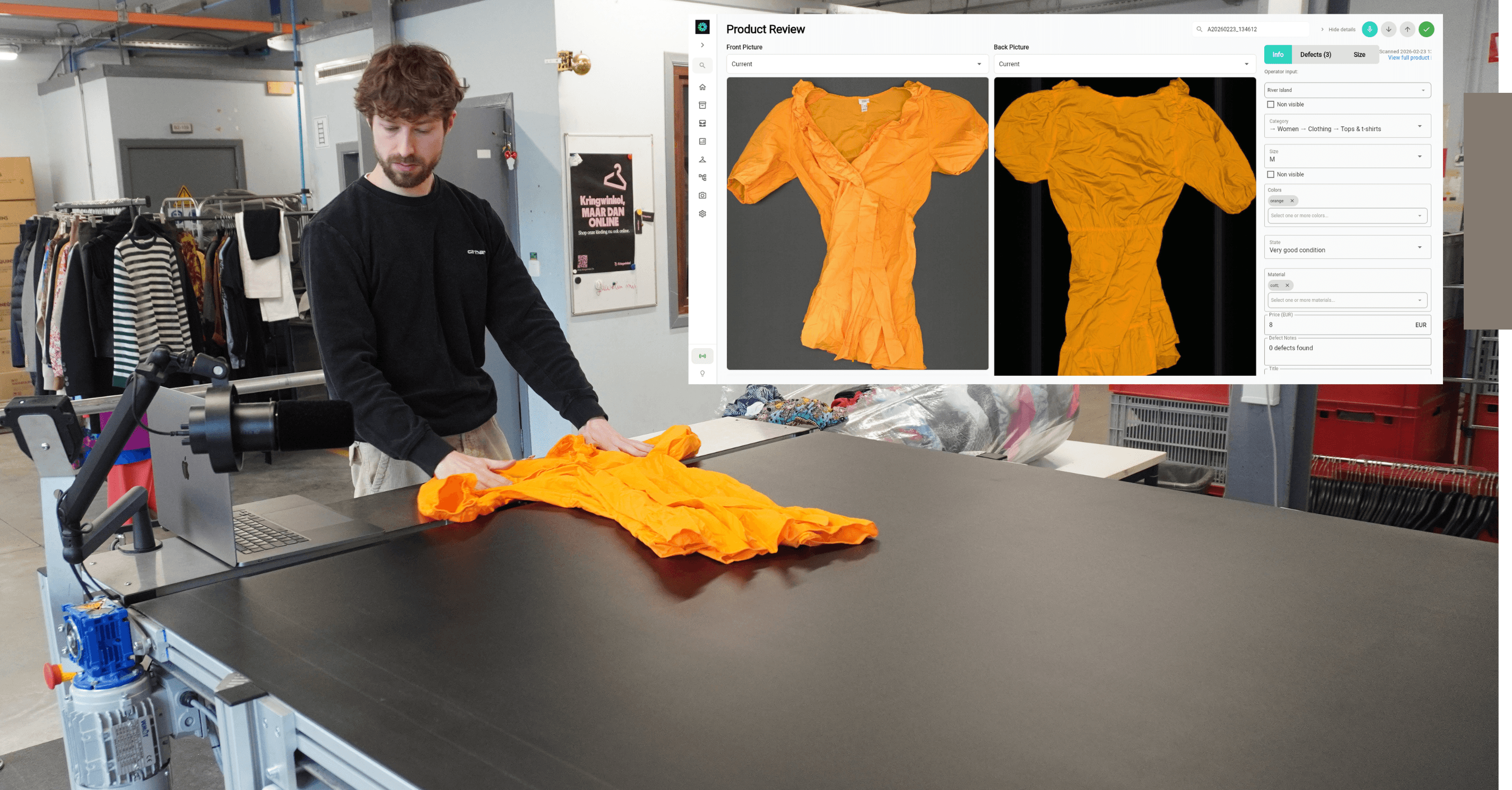
Think of it as a dual-track strategy. Use AI and automation to dominate the Reuse market today, capturing every bit of value from every garment. But simultaneously, use that same technology to prove you can deliver the high-purity feedstock the recycling market requires.
When the market finally unlocks, driven by regulation or falling costs, you don't want to be starting from scratch. You want to be the first phone call the recyclers make because you already have the infrastructure to deliver.
Build a sorting center that wins today and tomorrow.
Trosort helps you maximize your Reuse margins right now, while building the high-purity data needed for the recycling future. Don't wait for the market to catch up,get ahead of it.