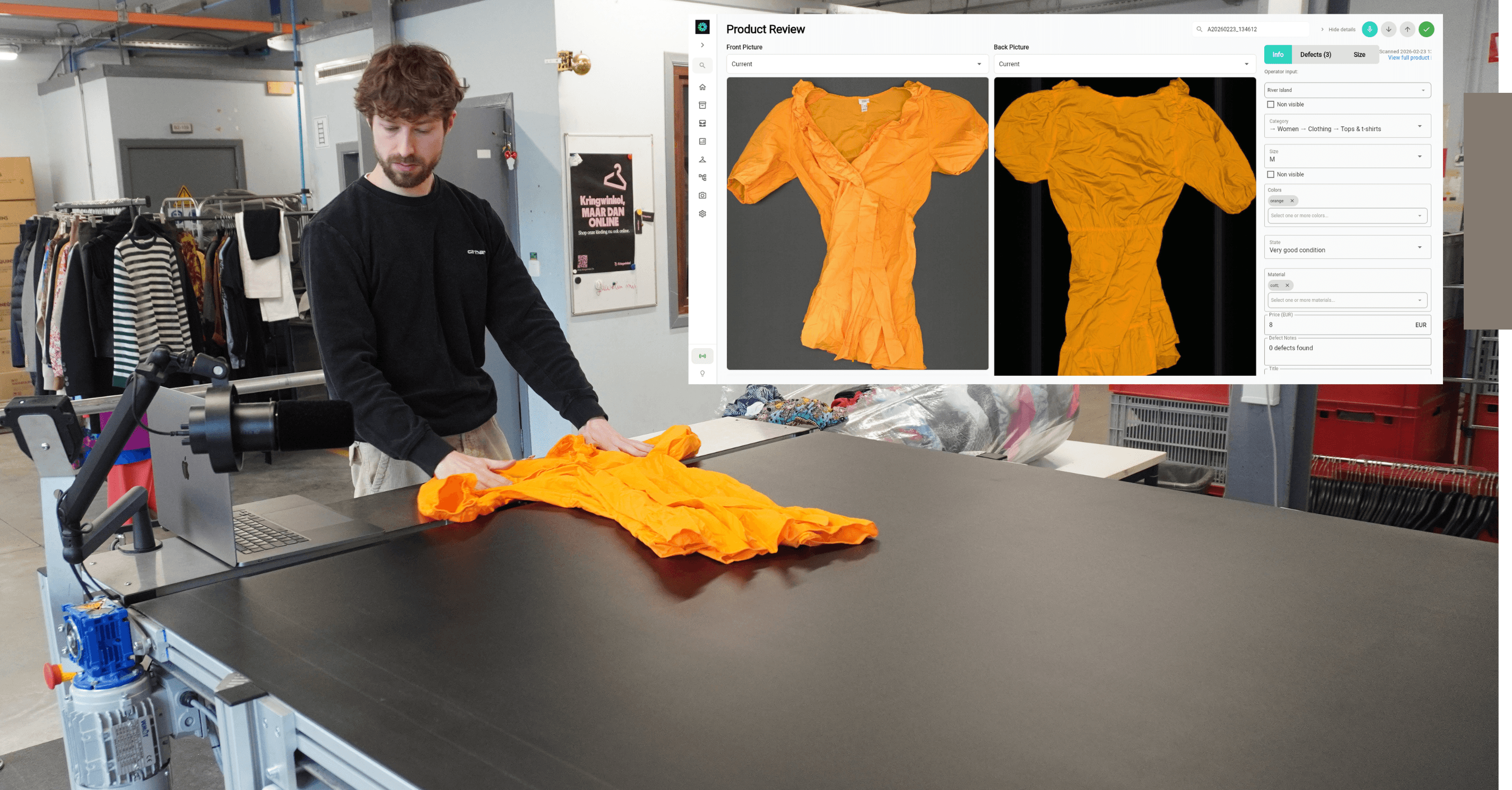
"AI is like a toddler; you have to invest time in training it. But once you do, our machine allows you to sort a garment in just 3 seconds."

The Textile Crisis
The second-hand sector is struggling. Europeans discard 16kg of textiles annually, but the rise of ultra-fast fashion means the quality of donations is plummeting. Organizations like Spullenhulp and Kringwinkel are being overwhelmed by low-quality clothing that often ends up being incinerated because manual sorting is too slow and expensive.
Trosort’s Innovation
Brussel-based startup Trosort has developed an AI-powered machine to sort textiles automatically for both reuse and recycling in one single pass. The technology automatically determines a garment's value, identifies the size, brand, material composition, color, and generates a sales description. This enables sorting centers to sort more efficiently, and sell items online quickly on platforms like Vinted, turning a labor-intensive manual task into an efficient digital workflow.
Valvan and Hypersort
While Trosort focuses on resale, the company Valvan specializes in high-tech fiber detection. Their "Hypersort" software uses infrared and 3D cameras to identify fabric compositions. This replaces the need for highly specialized manual experts by digitizing sorting knowledge, making it easier to decide whether a garment should be resold or recycled.
The Impact
The goal is optimization. Sorting kitting manually is heavy, time-consuming work. By reducing the time it takes to process an item to just three seconds, AI helps second-hand retailers survive the massive influx of textile waste and minimize their operational costs.
Read the full article of Sarah Vandoorne here.